
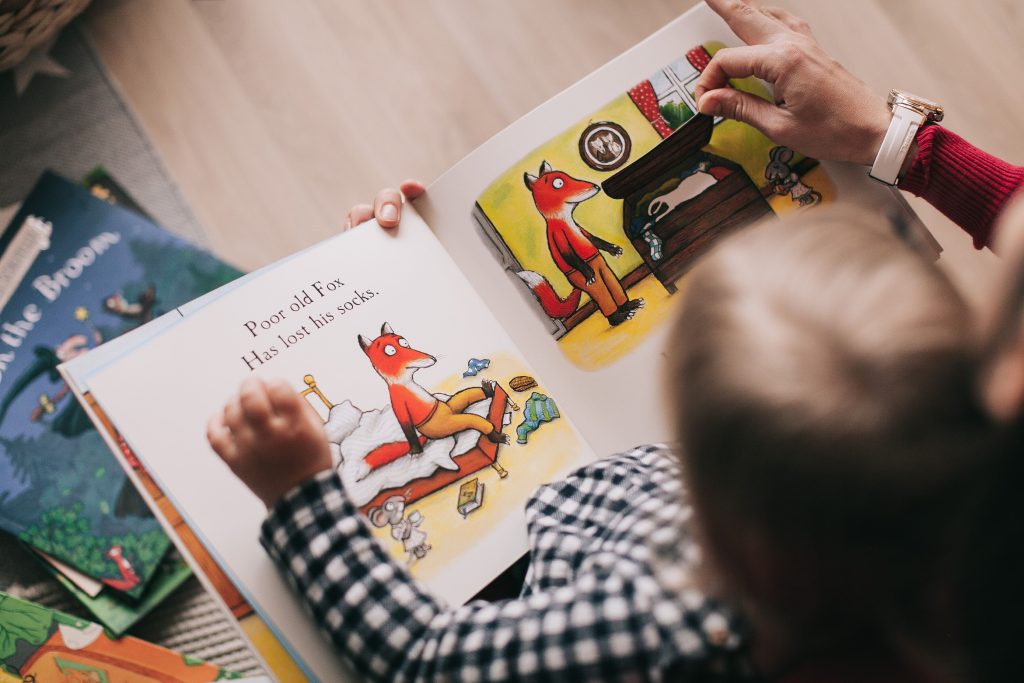
1. Jolly Phonics Picture Flash Cards
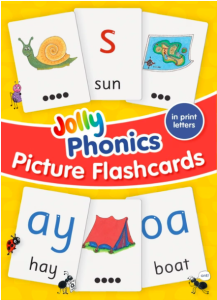
These flashcards come in a set of 60 and introduce children to the skills needed for reading and writing. Ideal for group activities or at home, they suit children aged 3-7. They allow children to develop their awareness of digraphs and letter sounds.
Why we like it:
- Sound recognition and vocabulary games.
- Matching activities.
- Small-group phonics practice.
2. LilliBoh Word Detectives – My first reading and spelling game
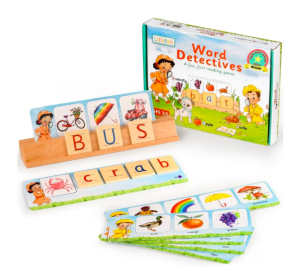
Phonics made fun! This Montessori-inspired game is aligned with the national curriculum, making it perfect for children in nursery and above. This game helps children master the four skills needed for reading: beginning sounds, letter recognition, blending and segmentation.
Why we like it:
- Explore 30 CVC words.
- Backed by science – playing games while learning improves knowledge and understanding by up to 25%.
- Makes learning fun.
3. Galt Magnetic Letters
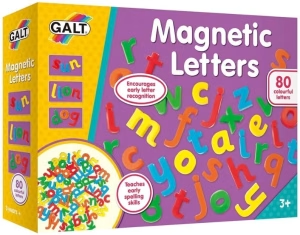
This 80-piece set includes magnetic letters in five bright colours. These letters are ideal for introducing children to early letter recognition, forming simple words and letter sounds. Each letter is designed using the correct lettering.
Why we like it:
- Includes play suggestions.
- Children can find letters, build their names and explore sounds.
- Add to a tuff tray, magnetic board or baking tray for a simple literacy invitation.
4. Wooden Magnetic Fishing Game for Toddlers | Award-Winning Numbers 1–10 Learning Game
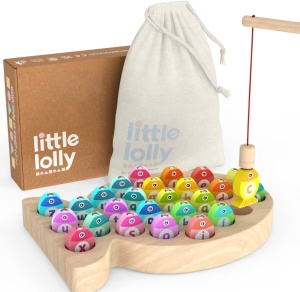
This game encourages children to learn letters through play. By building early phonics skills by matching uppercase and lowercase letters, this is a great way to add fun to learning. The game also supports building fine motor skills, concentration and hand-eye coordination.
Why we like it:
- Includes 26 double-sided wooden fish
- Learn letter sounds, first words and matching activities.
- Encourages imaginative play.
5. LITTLE BUD KIDS Spin-and-Read Phonics Toy
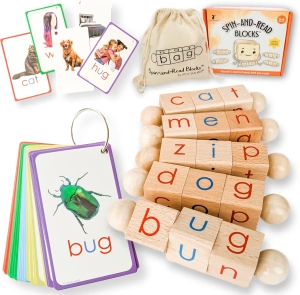
This spin-and-read phonics toy is a great way to encourage early readers with movable CVC builder blocks and matching flash cards. The rotating wooden letter blocks create 60+ 3 letter words, teaching the basic standards of reading.
Why we like it:
- Each rod features one vowel and a set of consonants.
- Versatile Montessori-inspired reading flashcards.
- Can be used for different stages of learning.
6. Oxford Reading Tree: Level 1+: Floppy’s Phonics: Sounds and Letters
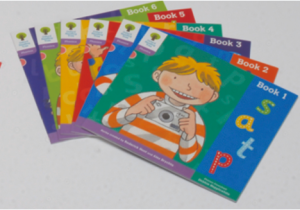
The Floppy’s Phonics books are designed to support children as they develop phonics and early reading skills.
There are 6 books at Level 1+:
- Book 1 practises ‘s a t p’
- Book 2 practises ‘i n m d’
- Book 3 practises ‘g o c k’
- Book 4 practises ‘ck e u r’
- Book 5 practises ‘h b f ff’
- Book 6 practises ‘l ll le ss’
Why we like it:
- Good literacy resource.
- Colourful pictures to keep children engaged.
- Consolidation activities include matching, tracing and reading.
7. Get Set Literacy: Letter Sounds
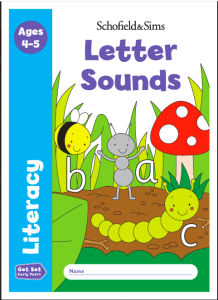
This is a comprehensive and engaging resource that combines letters, sounds, and simple activities. This provides additional practice to help children build early literacy knowledge. These books offer a motivating, exciting activity to support learning.
Why we like it:
- Introduces children to early phonics through single letter sounds
- A teacher’s guide and supporting resources.
- Takes children through phonemes, from ‘s’ for ‘sun’ to ‘qu’ for ‘queen’.
8. Montessori Sandtablet Early Training Letters and Signs
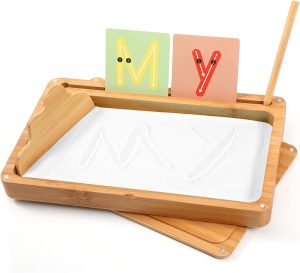
This wooden sand tray encourages children to use their fine motor skills to develop their early writing skills. The tray offers a fun way to help build hand strength until they master the correct letter formation. It is an engaging way to inspire a child’s creativity through play.
Why we like it:
- Edges are carefully rounded so they are smooth and safe for little hands.
- Can be used in different ways, including mark-making and letter formation.
- Choice of colours of sand, a wooden pen, a wooden scraper, a lid and 26 cards with upper and lowercase letters on them.
9. TTS Alice Sharp’s Pond of Poetry
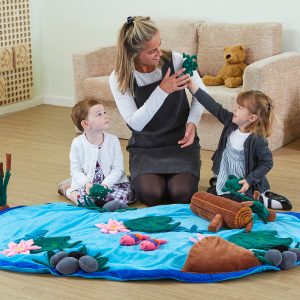
This poetry mat will spark curiosity and invite children to explore the hidden pockets to find treasures. Encourage children to develop their love for language and improve their literacy skills by sharing poetry, rhymes and stories. Nursery rhymes give children opportunities to hear:
- Rhythm
- Repetition
- Rhyme
- New vocabulary
- Sentence patterns
Why we like it:
- Supports the National Curriculum in EYFS settings.
- Promotes pretend play.
- Machine washable.
10. My First Complete Learning Library: Boxset of 20 Board Books
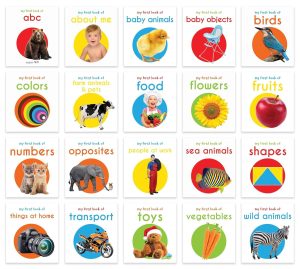
If you’re only going to spend money on one literacy category, build a good collection of picture books. This complete collection covers everyday topics perfect for little learners. Including: ABC, Numbers, Shapes, Colours, Wild Animals, Farm Animals and Pets, Birds, Fruits, Vegetables and Transport.
Why we like it:
- Develops reading skills
- Helps the child build vocabulary.
- Improves listening and observational skills.
What are the most important EYFS literacy resources?
You don’t need to buy every resource available.
If you’re working with a limited budget, I’d prioritise:
 1. Quality picture books – Children need plenty of opportunities to enjoy and talk about books.
 2. Phonics resources – Choose resources that complement the phonics programme used in your setting.
 3. Magnetic letters – Excellent for hands-on exploration.
4. Mark-making equipment – Give children lots of opportunities to make meaningful marks.
5. Storytelling resources – Puppets and props can encourage children to retell stories and develop vocabulary.
How to choose EYFS literacy resources
Before buying a literacy resource, ask yourself:
Can children use it independently? Resources that children can explore without constant adult direction can be particularly valuable in continuous provision.
Does it encourage talking? A good literacy resource should ideally provide opportunities for conversation.
Can it be used in different ways? Open-ended resources often provide better long-term value.
Does it match the phonics approach? If buying phonics resources, make sure they complement the phonics programme used by your setting.
Will it last? Consider whether the resource will still be useful next term and next year.
Don’t forget Communication and Language.
Literacy doesn’t begin with worksheets.
Children first need rich opportunities to listen, communicate, learn vocabulary, enjoy stories, sing songs and talk with adults and other children.
Current EYFS literacy resources therefore cover much more than reading and writing, spanning phonics, rhyme, songs, stories, reading, writing, and alphabet learning.
That means some of the best literacy resources you can buy may actually be:
 Books
Books Puppets
 Nursery rhyme resources
 Small-world figures
 Mark-making equipment
 Letters
Final Verdict
The best EYFS literacy resources are those that make children want to communicate, explore sounds, enjoy stories and experiment with words and marks.
For 2026/2027, our essential EYFS literacy shopping list would be:
✔ Quality picture books
✔ Phonics flashcards
✔ Magnetic letters
✔ CVC word resources
✔ Mark-making equipment
✔ Storytelling props
✔ Nursery rhyme resources
✔ Pencil-control resources
Instead of filling your setting with worksheets, create a literacy-rich environment where children can read, talk, sing, write, pretend, and explore every day.