
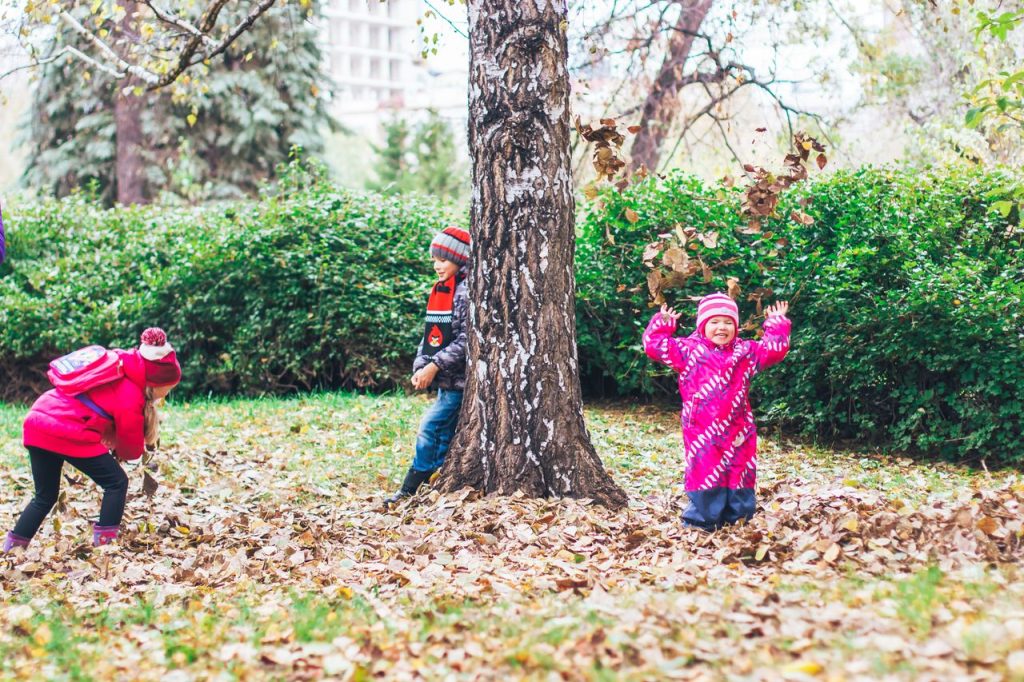
Are you looking for free activities this Autumn? Are you a practitioner, parent or a teacher? Then this guide is for you.
Autumn provides endless opportunities for learning through play. You don’t need expensive toys or to waste valuable time setting up activities. Explore the wonders of Autumn outdoors, with leaves, acorns, sticks and pumpkins. Even the changing weather can create learning opportunities.
We have compiled 20 free autumn activities you can use at home, in a nursery setting, preschool, reception and childminders. These activities are ideal if you are working with a limited budget, as they require little to no equipment.
🍁 1. Go on an Autumn Nature Hunt
An Autumn Nature Hunt is one of the easiest free activities you can do. Use the nature hunt to find things and incorporate many areas of learning by encouraging children to describe what they discover. Use a bag or a basket to allow children to collect items as they see them.
Autumn Nature Hunt Checklist:
- A red leaf
- A yellow leaf
- A brown leaf
- A small stick
- A large stick
- A small leaf
- A large leaf
- A pine cone
- A conker
- Something smooth
- Something rough
🍂 2. Leaf Sorting
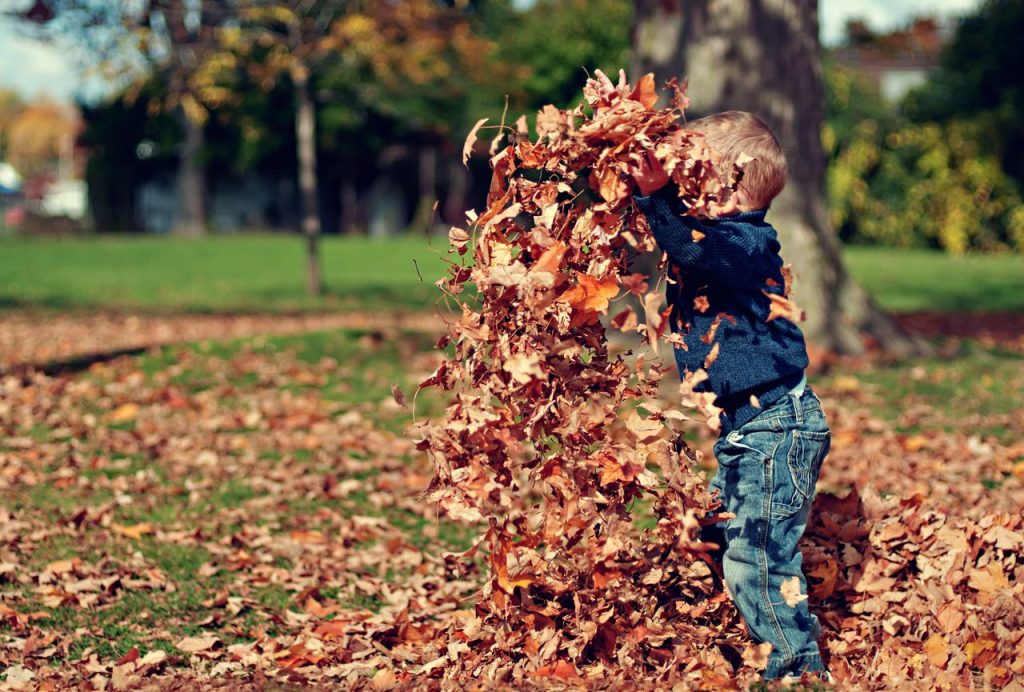
Once you have collected the fallen leaves, you can extend their learning by asking children to sort them.
They could sort by:
- Colour
- Size
- Shape
- Texture
Incorporate an early maths investigation by asking them the following questions:
- “How many are in each group?”
- “Which group has the most?”
- “Can you find two leaves that are the same?”
🔍 3. Explore Leaves with a Magnifying Glass
Using a magnifying glass is a great way to encourage curiosity and spark imagination. If you have one available, it’s a great tool for investigating autumn leaves. Encourage children to describe what they notice, such as:
- The veins
- The edges
- Spots
- Colours
- Tiny insects
If you don’t have a magnifying glass, I recommend buying one. You can use it year-round to investigate other natural objects, stones, insects, and plants.
🌳 4. Autumn Tree Investigation
To help children understand change over time, this is a wonderful way for them to see the natural changes that Autumn brings. Find a tree near your home, nursery or school. Ask open-ended questions to encourage them to use their speech and language skills to describe what they see.
The questions could be:
- “What colour are the leaves?”
- “Are there leaves on the ground?”
- “Are there leaves still on the tree?”
- “What happens when the wind blows?”
You could take a picture, then return to the same tree a few weeks later to see what has changed. Then take another photo and compare the trees for a group activity on seasonal changes.
🍁 5. Make a Leaf Rainbow
Another free way to use leaves is to make a leaf rainbow. To do this, arrange them from one colour to another to create a natural rainbow.
For example: green → yellow → orange → red → brown
This activity is a great way to encourage conversation about colour mixing and seasonal changes, and it lets children decide how they want to arrange them.
🔢 6. Count the Leaves
Leaves are a great free maths resource. For a quick maths activity, collect ten leaves and place them in a line. Then count the leaves together with the children. For older children, you can extend their learning by asking them to:
- “Can you find 5 more?”
- “Can you take 2 away?”
- “How many do we have now?”
You can also separate the leaves into two piles for the children to compare. Ask questions such as:
- “Which group has more?”
- “Which has fewer?”
This is a simple way to incorporate maths with no expensive resources or worksheets required!
🧮 7. Make Leaf Patterns
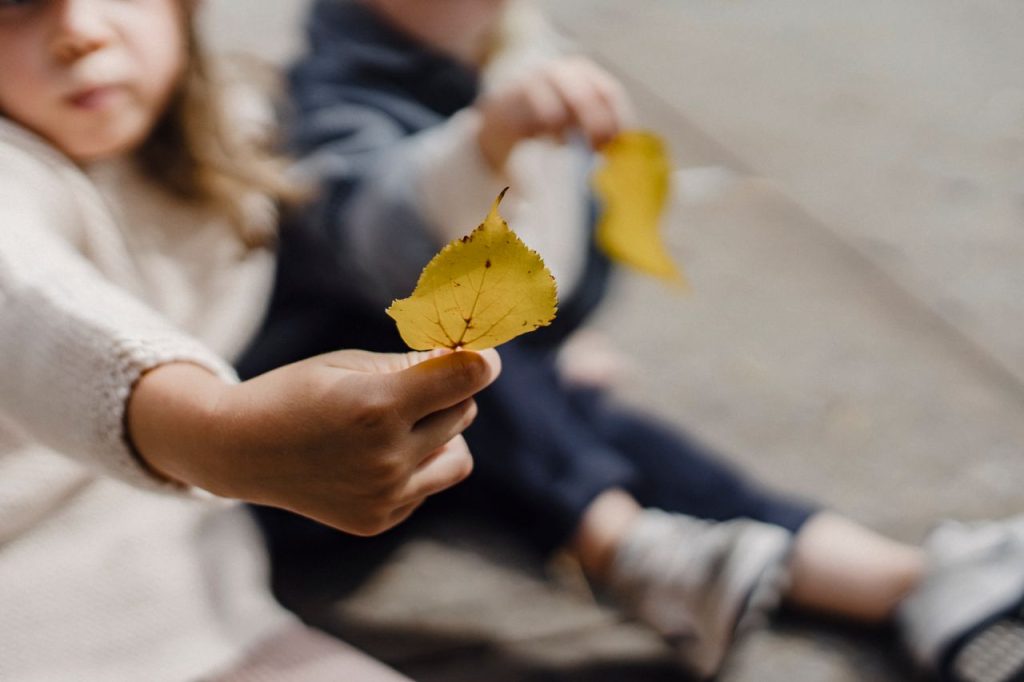
Another leaf activity to introduce early mathematical thinking. This time, collect different types of leaves and create a simple pattern for the children to continue, or allow them to create their own. For example, the patterns could be:
- big – small – big – small or
- red – yellow – red – yellow
🐿️ 8. Create a Free Woodland Small World
You don’t need to buy a woodland playset; you can add any toy animals you already have from your resources. This lets children create their own woodland.
Go on a hunt and find:
- Sticks
- Leaves
- Stones
- Pine cones
- Cardboard
- Small boxes
Extend their learning by asking open ended questions:
- Where does the fox live?
- Can you make a home for the hedgehog?
- Where could the squirrel hide?”
🍎 9. Apple Investigation
Apples are great for investigating. Cut open an apple and look inside. Ask questions such as:
- What colour is it?
- What shape is it?
- What size is it?
- What is the texture like?
- What does it smell like?
To extend their learning, talk about where apples grow and what happens to them when they are cut open. You can also:
- Count the seeds.
- Compare different-sized apples.
- Draw an apple.
- Describe it using as many words as possible.
🍃 10. Listen to Autumn
By simply taking the children outside, you can listen to the sounds of Autumn.
Ask them what they can hear. This is a lovely opportunity to develop listening skills and descriptive vocabulary.
Perhaps they can hear:
- Wind
- Birds
- Leaves crunching
- Cars
- Rain
- People talking
✏️ 11. Leaf Rubbings
Children can experiment with different colours in this activity. Place a leaf under a piece of paper, then use a crayon or pencil to rub gently over it. Children can watch as the leaf’s shape and veins appear on the paper. Encourage children to try different leaves to compare the results.
🎨 12. Paint with Leaves
You can also paint with leaves. If you already have paint available, use fallen leaves as printing tools. Dip the leaf into paint and press it onto paper.
To extend their learning, ask the children:
- “What happens when we use the other side of the leaf?”
- “Which leaf makes the biggest print?”
🐦 13. Make a Bird-Watching Station
Another activity where you don’t need specialised equipment. Find a place where children can safely observe birds.
Ask questions such as:
- How many birds can you see?
- What colours are they?
- What are they doing?
Children could draw the birds they see afterwards. A pair of child-friendly binoculars can be an optional addition if you want to extend the activity.
🍃 14. Autumn Vocabulary Hunt
Take the children outside and give them a list of five autumn words. Ask the children to find or experience something connected to each word. For children developing speech and language, give them plenty of time to look, listen and respond rather than rushing to answer for them. Encourage children to repeat and use the vocabulary naturally.
The five autumn words could be:
leaf • tree • wind • rain • acorn
🦔 15. Make a Hedgehog from Natural Materials
A really fun activity to do after a nature hunt. This letsen to math own choices and experexperexperimentuse a fallen leaf or a piece of cardboard to use as the hedghog. Then allow the children to freely use leaves, sticks and other natural materials to create their own hedgehog.
🌧️ 16. Investigate Rain
In Autumn, the weather gives you a free science experiment! During and after rainfall, go outside and investigate. You could also put containers outside to see how much rain is collected. Ask questions such as:
- Where has the water collected?
- Is the ground: Wet or dry? Muddy or hard? Cold or warm?
Put containers outside and see how much rain collects.
To extend their learning, talk about what happens to the water afterwards.
👣 17. Make Mud Prints
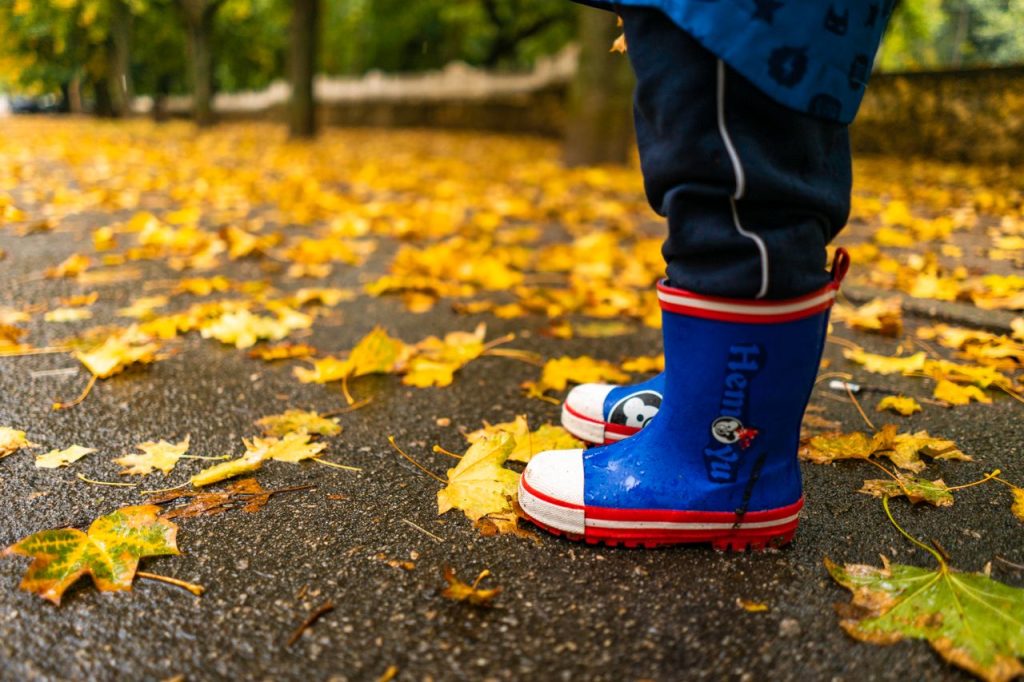
A great way to use the ground if it is muddy.
Can children find and compare shapes and sizes of:
- Shoe prints
- Animal footprints
- Bird footprints
- Tyre marks
📚 18. Tell an Autumn Story
You don’t need an autumn book to tell an autumn story. This is a wonderful free activity for developing communication, vocabulary, imagination and storytelling.
Start a story with:
“One windy autumn morning…”
Then let the children decide what happens next! Perhaps…
- A squirrel loses an acorn?
- A leaf gets blown away?
- A hedgehog finds a new home.
Allow children to take turns in adding to the story.
🔤 19. Autumn Sound Hunt
Go outside and choose a sound children are learning. Ask children to look for things beginning with that sound.
For example, the children are learning the sound ‘s’.
You might find:
- A stick
- A stone
- A seed
- A shell
Don’t worry if you can’t find many examples. The purpose is to make phonics meaningful and connected to the children’s environment.
🥾 20. Go on a Crunchy Leaf Walk
Finally, one of the simplest autumn activities of all! Find an area covered with fallen leaves and listen to them crunch. Talk about the sound with the children:
Crunch! Crackle! Rustle!
Can you ask the children think of other words to describe the sound? This simple activity combines movement, sensory exploration and language development.
🍂 How to Make Free Autumn Activities Even Better
The key to EYFS activities isn’t necessarily the equipment you use. It’s the conversation and interaction around the activity. Instead of simply saying:
“Sort these leaves.”
try:
“I wonder what you notice about these leaves?”
Instead of:
“Count the leaves.”
try:
“I wonder how many leaves we’ve collected?”
Open-ended questions encourage children to think, talk and explain their ideas.